
Flour-,seed- & kitchenmoth
Flour moths and seed moths in the kitchen? Large selection of traps, sprays, insect catchers and cedar wood. Buy now - receive in 1-3 days.
If you have moths in the kitchen that go after food, then it is probably a flour moth or a seed moth. Find products for combating mealybugs and seed moths here.
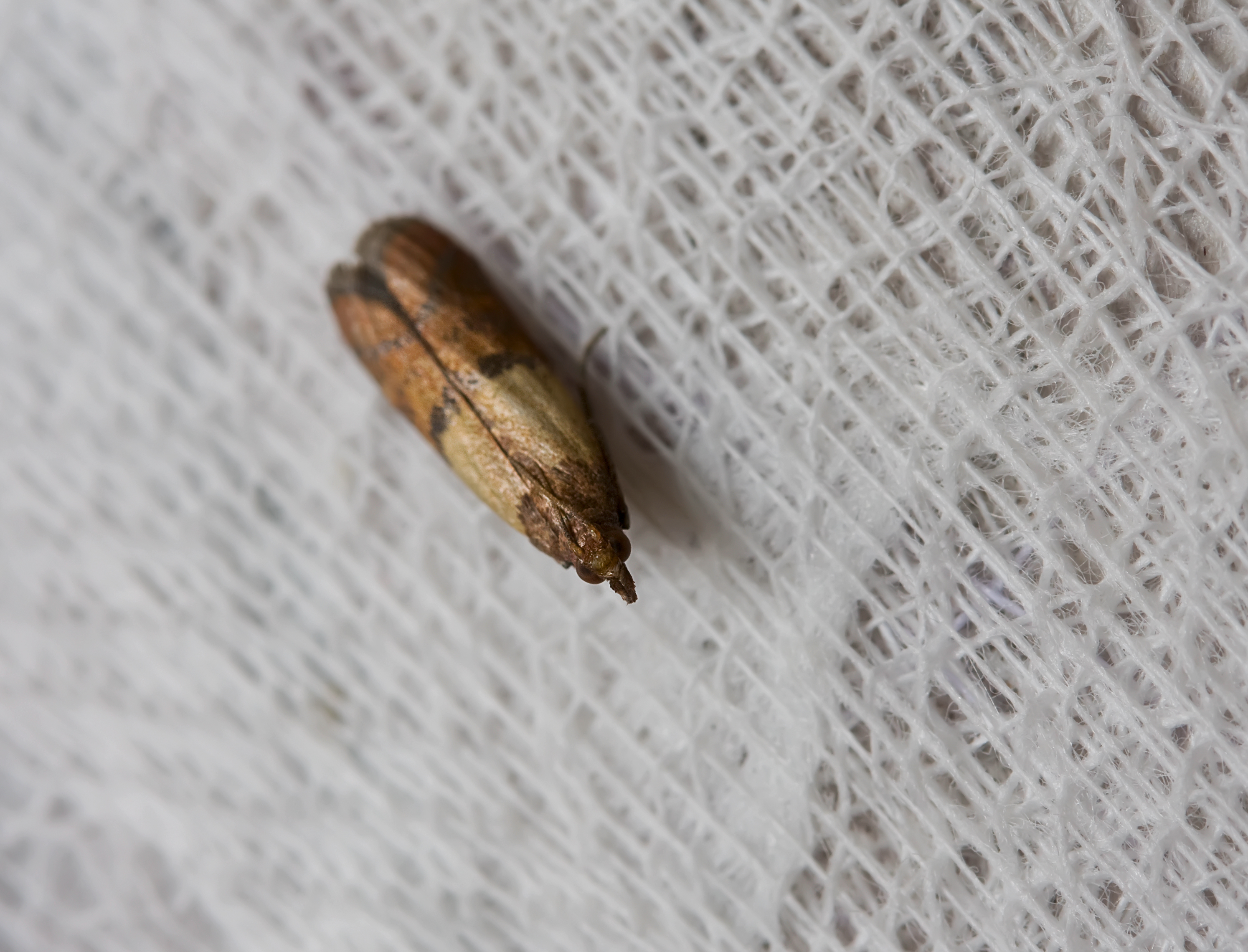
Flour and seed moths
Size Wing length: 6-16 mm
Season: All year, mainly May - September
Habitats Indoors with flour, pasta, chocolate, beans, spices, coffee, grains etc. Outdoors in hay, straw and plant waste
Appearance:
A bicolored seed moth (Plodia interpunctella) is typically 0.7 – 1.1 cm in body length, while it has a wingspan of between 1.5 and 2.0 cm.
The front part of the moth's wings is a light shade of grey, while the lower part of the wings is bronze/brown-red. It is precisely this color division that has given its name to the two-coloured seed moth. The two colors on the wings make the moth easier to recognize compared to many other moths.
Bicolored seed moths are most active at night and naturally seek light. Therefore, a good tip is to turn on a lamp in the dark to attract seed moths.
Habitats:
Two-colored seed moth is an immigrant to Denmark. It originates from South America, and probably came to Northern Europe in connection with import of food. Today, two-colored seed moths are found almost all over the world, where they are especially a challenge in countries around and south of the equator. The two-colored seed moth is seen more and more often in Denmark as we increasingly import more and more "exotic" food such as bananas, coffee, grains and the like from Argentina, Brazil, Columbia and other Central and South American countries. In comparison with cloth moths and fur moths, bicolor seed moths are less frequent in Denmark.
Food:
Many perceive the flying seed moths as pests, when in fact it is the larvae that do the damage. They feed on a wide variety of foods, which means they gnaw their way into grains, beans, pasta, rice, flour, spices, grits and similar products. Food stored in ordinary paper packaging is no obstacle for the larvae. Therefore, it is very common for larvae from the two-colored seed moth to make holes in the packaging for your food, and as a consequence you can find cereals, pasta and other food scattered throughout your kitchen and storage cupboards.
How to control seed moths:
For effective and continuous control of two-colored moth and similar moths, it is crucial to control the larvae. This will limit the growth of new moths in the area. You should therefore clean the places where you have observed the larvae and two-coloured seed moth - typically in kitchen cupboards and kitchen drawers. In addition, you should secure all your cereal and flour products in a container that can be closed tightly.
Step by step guide to control:
✔ ️ Remove all food from areas and check for holes or other signs of caterpillars and moths.
✔ ️ All food that shows signs of moths and larvae should be thrown in the bin outside your home.
✔ ️ Clean all kitchen cabinets and kitchen drawers, use a vacuum cleaner to get around cracks and crevices. Dry afterwards with a damp cloth.
✔ ️ If you have food that has exceeded its use-by date, these should also be thrown away.
✔ ️ Use insecticide (gift) and traps to kill the last larvae.
✔ ️ Please note that flour moth special offer of organic products.
✔ ️ Then place cedar wood in cupboards and drawers. Cedar is a preventive wood species against insects.
✔ ️ Store food in the future in a metal or plastic box that can be closed tightly.
✔ ️ Set up traps to catch potential new seed moths in the area.
Tip: Buy fewer dry products if you want to reduce the likelihood of moth infestation in your kitchen. Possibly. you can freeze newly purchased food, it kills the eggs of moths.
Typical signs of moth infestation:
Food: On products that have been attacked by lichens, you can often find webs from the larvae or small lumps of excrement from the larvae.
The larvae: Newly hatched larvae are very small and can be difficult to see even for the trained eye. Full-grown larvae in or near food. Lichens are typically found in cracks and crevices where you store your food in cupboards and drawers. The larvae have shades of yellow or white, the head of the larva is brown. And can be up to 14 mm.
Growing seed moth: See description under "appearance" further up.
Life:
The life span of the larvae of the two-colored seed moth is influenced by the temperature (indoors). At cold temperatures, the larvae develop more slowly, while in warmer temperatures between 25-35 degrees they develop over approx. 30 days.
In the course of 365 days, 6-10 new "litter" can develop from caterpillar to moth. In Denmark, however, the temperature will often mean that a maximum of 1-2 litters are hatched per year.
The developed larvae are now adult two-colored seed moths, which typically live for about 5-25 days, depending on the environment. During the female moth season, the seed moth can lay up to 400 eggs, so you can quickly experience a definite invasion in your home if you do not fight two-colored seed moth.