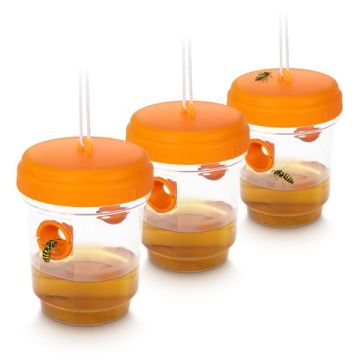
Wasp Trap Prof (without lure) The well-designed Wasp Trap Prof consists of two parts. The upper transparent part, so that the light can shine in, the lower part yellow with a funnel-shaped entrance.
Wasp trap Prof (without lure)
The well-designed Wasp Trap Prof consists of two parts. The upper transparent part, so that the light can shine in, the lower part yellow with a funnel-shaped entrance. The trap is effective, partly because of the yellow color that attracts the wasps, and partly because of the lure, which is a biological sweetener that must be placed at the bottom of the trap when it is set up.
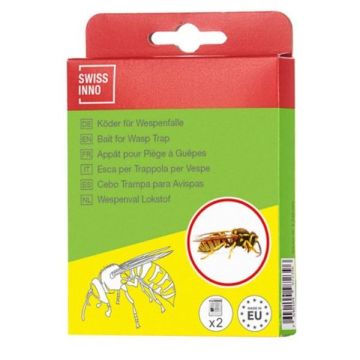
The lure attracts the wasp. Once the wasps enter the trap, they cannot get out again and will drown in the bait. The attractant is a non-toxic and biological product that only attracts wasps, not bees or other beneficial insects. The lure is purchased separately item no. 3403 500 ml.
Location
This simple, environmentally friendly and effective trap can be hung outdoors or indoors. The placement should take place approx. 4-5 meters from the area you want to protect against wasps. The trap will significantly reduce the wasp infestation within its reach. The trap should be placed so that children cannot open it, as the aggressive wasps can sting. The trap must be inspected approx. every 2-3 days, is emptied of dead wasps and possibly refilled with the bait. The lure can be bought separately in 100, 250 or 500ml. bottles.
The trap can be reused year after year. It is emptied of liquid and dead wasps and cleaned with water and stored for the next season.
Areas of application
All places where wasps can be a nuisance and where both hygienic and environmentally sound control is desired - oak. in food stores, commercial kitchens, grill bars, offices, institutions, private homes, conservatories, terraces, in fruit trees, etc.
Tip:
When the Wasp Trap Prof is placed in the sun, which provides the most effective catch, the bait evaporates faster. The effect of the lure can be extended by adding a little water.
Briefly about the wasp (also called the hornet).
In the middle of summer, the wasps' society dissolves. They change their diet and thus go from proteins to carbohydrates (sugars). At this time of year, the wasps become extremely active after sugary substances, and this is often where the wasps become a severe nuisance for us. Sugar attracts the wasp, but also repels the attack aphids attract the wasps, as the excrement of the aphids contains sugars which the wasps feed on.

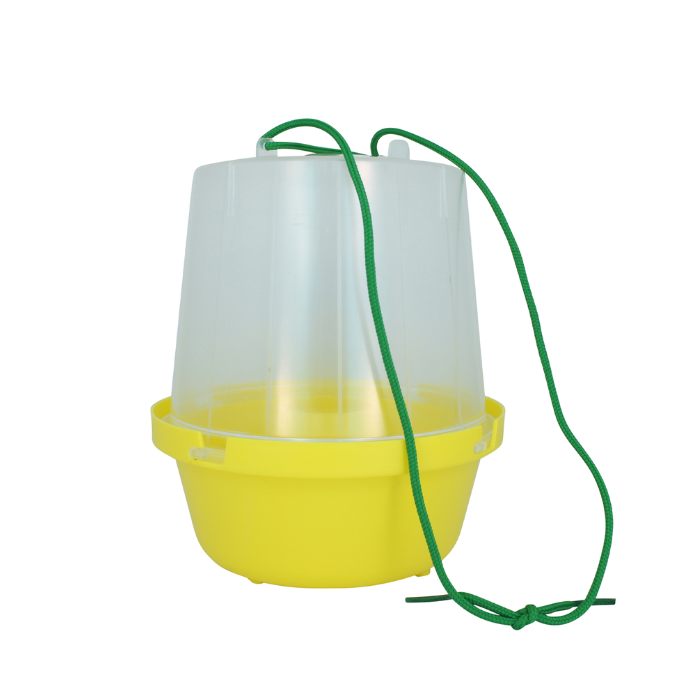
 Wasp trap Prof.